Institution news
The Chernobyl Trace in the Soils of Ukraine: Science, Memory, and Responsibility
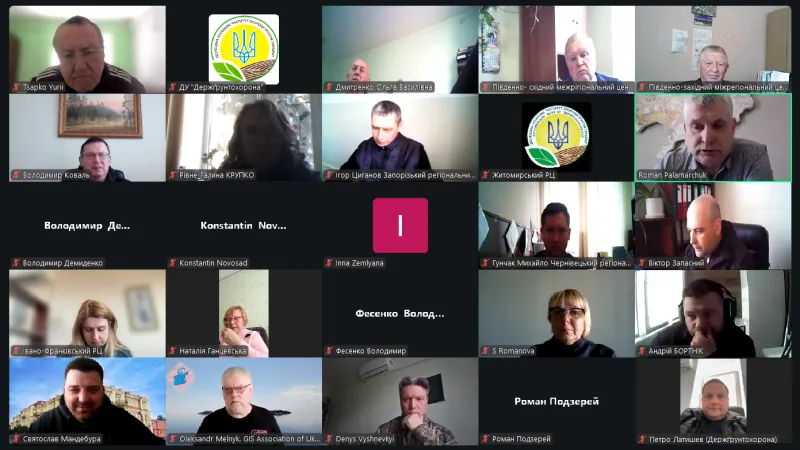
On the occasion of the 40th anniversary of the Chernobyl accident, the State Institution “Institute of Soil Protection of Ukraine” held the All-Ukrainian Scientific and Practical Conference “Chernobyl Trace in the Soils of Ukraine: Scientific Measurement of Time”.
The event was moderated by Svitlana ROMANOVA, Deputy General Director for Scientific Activities of the State Institution “State Soil Protection”, Candidate of Agricultural Sciences, Senior Researcher.
The event brought together scientists, practitioners and representatives of specialized institutions around a topic that remains relevant even after decades. It was not only about the consequences of the disaster, but also about the modern vision of the state of soils, risks and approaches to their restoration.
Opening the conference, Acting General Director Roman Palamarchuk emphasized that Chernobyl is not only history, but also an experience that shapes the modern understanding of human interaction with the environment. He emphasized that soils were one of the key environments for the accumulation of radionuclides, which determined the long-term nature of the impact of the disaster on ecosystems and food security. At the same time, the tragedy became a powerful impetus for the development of science, in particular in the direction of studying the behavior of radionuclides, creating monitoring systems and developing approaches to land restoration.
The importance of the human factor was especially emphasized - the feat of the liquidators, thanks to which it was possible to reduce the scale of the disaster. Today, this experience takes on a new meaning, as Ukraine is once again facing challenges that affect the state of the environment and soils.
A number of reports were presented at the conference, covering both historical experience and modern scientific approaches. Denys Vyshnevsky outlined the results of military impact on the environment in the exclusion zone, drawing attention to new risks associated with military operations. Oleksandr Melnyk presented international GIS projects implemented in the Chernobyl zone, and Yuriy Tsapko revealed the role of soils as a natural mechanism for self-remediation of contaminated areas.
Olga Dmytrenko spoke about changes in the soils of Ukrainian Polissya after the accident using the example of specific areas, while Oleksandr Stupenko presented the results of research on radioactively contaminated lands in the first decades after the disaster. Lyudmila Raichuk focused on approaches to assessing the radioecological criticality of agricultural landscapes and their use for optimizing land use.
The practical dimension of the topic was supplemented by speeches by the Institute's specialists. Andriy Bortnik described the current radiological state of the territories of Western Polissya and the peculiarities of agricultural production, and Halyna Krupko presented effective agrotechnical and agrochemical measures that allow reducing the accumulation of radionuclides in the harvest.
Young people also demonstrated a modern view of the problem. NUBiP student Veronika Bondarchuk presented research on remote monitoring of pollutants in the air over the Chernobyl zone, in particular in the context of the impact of hostilities.
The conference became not only a platform for exchanging knowledge, but also a space for reflecting on experience that remains important for today. The Chernobyl footprint in soils is not only a scientific fact, but also a reminder of responsibility for decisions that affect the environment for decades to come.
As Roman Palamarchuk noted in his closing remarks, the combination of science, practice, and experience forms the basis for further research and decisions aimed at preserving and restoring the lands of Ukraine.